
Estimated reading time: 27 mins
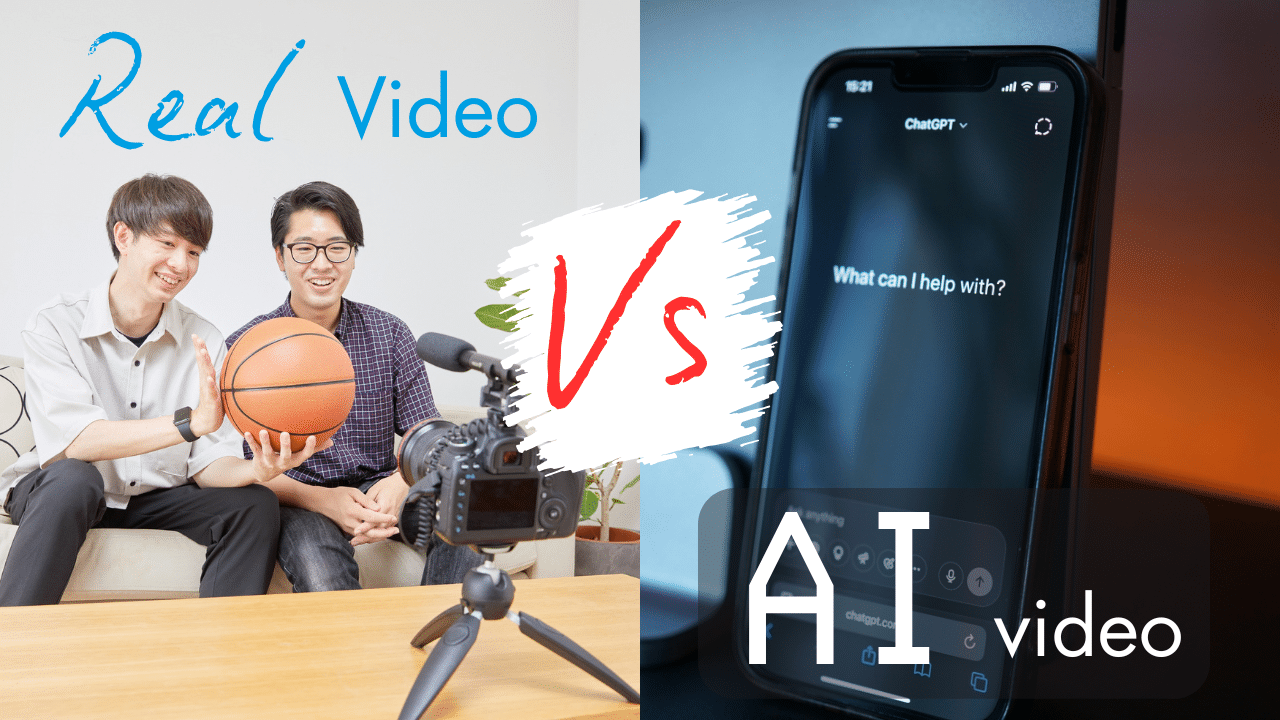
Summary
AI generated video for business is rapidly changing how brands communicate, market, and build authority online. From synthetic presenters to fully automated explainer videos, companies now have powerful new tools at their fingertips. But as AI video adoption accelerates across the UK, an important question emerges: does it strengthen trust, or quietly erode it?

Table of Contents:
- Introduction
- The Rise of AI Video
- The Problem: What (and Who) Can You Trust Online Anymore?
- Why This Matters to Service Providers
- So What Happens When AI Looks Perfect?
- Could Being Real Be Our Next Great Advantage?
- Should Service Providers Actually Use AI Video in Their Marketing?
- How to Prove Your Videos Are Real (and Maintain Trust)
- The Future of Business Video
- Final Thoughts
Introduction
Not long ago, I scrolled past a video on LinkedIn that looked completely real — a smooth, cinematic clip that turned out to be generated purely from text. Days later, I saw the “Pope in a puffer jacket” image fool millions around the world.
Moments like these keep happening. They’re harmless on the surface, but they reveal a much bigger problem: viewers are no longer sure what’s real online. And for service providers who rely on trust and expertise, that uncertainty has real consequences.
Back to Table of Contents (top of page)
The Rise of AI Video
If you’ve been anywhere near digital marketing over the past three years, you’ve seen artificial intelligence shift from an interesting toy into a dominant force. It’s expanded into an entire ecosystem of ai tools capable of producing images, voices, and eventually full-motion video that looked shockingly real.
Runway made early noise with high-fidelity generative video systems, later launching its Gen-4 model, described by TechCrunch as “one of the most impressive AI-powered video generators released to date.”
Pika Labs gathered momentum too (raising significant funds) to develop tools that turn text descriptions or still images into moving footage. Google’s research teams released advanced generative and diffusion models. Meta added AI creation tools across its apps. Claude, developed by Anthropic, became a leading assistant for brainstorming, scripting and creative planning. Meanwhile, newer generation startups were demonstrating generative video engines capable of animating ai images into convincing scenes.
Then came major advances in systems like Sora and Google Veo: text-to-video models trained to create coherent and seemingly lifelike sequences from text prompts alone.
This rise wasn’t subtle. In early 2023, researchers at Harvard Kennedy School documented a sharp increase in synthetic content across social platforms, noting a spike of AI-generated media on X (formerly Twitter). Within a matter of weeks, synthetic clips were appearing across multiple platforms – TikTok, Instagram, LinkedIn – faster than most viewers could verify whether what they were seeing was real.
The public reaction was clear: while some people were excited, many weren’t sure what to believe. For the first time, everyday viewers scrolling through their feed were genuinely asking, “Was this filmed… or generated?”
Major platforms quickly responded. TikTok introduced labels for AI-generated content. YouTube introduced disclosure rules. Various tech companies began collaborating on standards for verification and metadata to help audiences distinguish real footage from synthetic or ai-generated material.
This is the environment modern marketers now operate in: a powerful, fast-moving creative landscape, but one where audiences carry far more skepticism than they once did.
And for service providers, where credibility, expertise, and genuine human presence matter, that shift is a huge headache.
Back to Table of Contents (top of page)
The Problem: What (and Who) Can You Trust Online Anymore?
Whether you’re a marketer, a CEO, or a business owner, you’ve probably felt it: the internet doesn’t feel as solid as it used to.
A few years ago, if you saw someone speaking confidently on camera, you’d assume it was real. A customer sharing a testimonial felt genuine. A founder explaining their process felt trustworthy. A behind-the-scenes clip of a team at work seemed like proof.
But now, people hesitate.
We’ve entered a digital environment where the average person can’t immediately tell the difference between a filmed moment and an ai-generated one. And when audiences are unsure, they default to caution.
It only takes a handful of well-publicised incidents to shift behaviour. For example:
- In 2024, Berkshire Hathaway publicly warned that AI-generated videos impersonating Warren Buffett were circulating online, falsely promoting investment schemes – convincing enough that the company felt compelled to issue a formal alert.
Reuters coverage: https://www.reuters.com/business/finance/berkshire-warns-ai-deepfakes-impersonating-warren-buffett-2025-11-07/ - During major weather events, AI-generated disaster videos – including fabricated footage of sharks swimming through flooded buildings – have gone viral on social platforms, spreading confusion during real emergencies.
Associated Press report: https://apnews.com/article/682d8acff33af4509d615e742698d99a - In another case, AI-generated celebrity videos were used to build fake relationships and financial scams, costing victims tens of thousands of dollars. A stark example of how lifelike synthetic video can cause real-world harm.
Entertainment Weekly report: https://ew.com/fake-videos-of-general-hospital-star-steve-burton-scam-woman-out-of-life-savings-11800356 - During recent election campaigns, AI-generated political deepfakes have been used to mislead voters, including realistic synthetic audio and video designed to suppress participation or distort public perception. In one widely reported case covered by BBC News, authorities investigated an AI-generated call that impersonated a political figure, highlighting how easily deepfakes can be deployed during high-trust moments like elections, and how difficult it can be for audiences to verify what’s real in real time.
BBC News: https://www.bbc.co.uk/news/world-68295845
Alongside these incidents, surveys show a growing loss of confidence. A 2024 YouGov study found that 81% of UK adults are concerned about the trustworthiness of online content, with nearly three-quarters specifically worried about AI-generated material contributing to misinformation.
YouGov research: https://yougov.com/en-gb/articles/49550-labelling-ai-generated-digitally-altered-content-misinformation-2024-research
Other studies suggest that only a tiny fraction of people can reliably detect deepfakes (0.1%), leading many users to trust social platforms less once they realise how convincing synthetic content has become.
iProov research summary: https://www.iproov.com/press/study-reveals-deepfake-blindspot-detect-ai-generated-content
Each of these examples chips away at confidence, not because people think everything they see is fake, but because they’re no longer sure which specific things are real.
That uncertainty is the real problem.
And it directly affects service providers: the accountants, agencies, consultants, legal teams, trainers, and healthcare professionals who rely on trust, clarity, and perceived expertise to attract clients.
Because when audiences start to trust anything less, it impacts everyone.
And that’s where the challenge begins for service providers:
when your customers aren’t sure what to believe, how do you prove that your content is real?
Back to Table of Contents (top of page)
Why This Matters to Service Providers
For global platforms and big tech companies, the rise of artificial intelligence (AI) is an innovation story. For service providers, it’s something far more practical: a story of trust.
Most service organisations; whether you’re an accounting firm, an HR consultancy, a healthcare provider, a training company, a legal practice, or a specialist agency, rely on something that’s becoming harder to maintain online:
The belief that you are who you say you are. And that your expertise is real.
Your website, your videos, your LinkedIn presence, your team photos, your client testimonials; all of it works because potential clients believe they’re seeing you.
But in a world where ai-generated visuals, synthetic voices and polished ai-created clips spread faster than real footage, audiences naturally become more cautious. The moment people know that realistic content can be fabricated with a laptop and an internet connection, they instinctively raise their guard.
And here’s where it becomes very real for service providers:
1. Your credibility becomes harder to convey.
If a prospect can’t immediately judge whether a video of you is genuine, they hesitate, even if only for a second. And hesitation kills momentum.
2. Your expertise becomes harder to prove.
In service industries, clients don’t buy a product. They buy expertise. If competitors begin posting ai-generated experts or fake “team culture” videos, the marketplace becomes noisy and confusing for buyers.
3. Your content competes with synthetic content.
Your real team, real office, real story is now competing for visibility against highly polished, hyper-presented, generative videos that can be produced at scale.
4. AI changes how fast others can publish.
When someone can generate a full video sequence in minutes with AI, it can feel like its difficult to compete with and a pain to create your own real content.
Ultimately, for service providers, it’s a trust issue.
Your clients choose you because of your people: their expertise, their personalities, their presence. If audiences start mixing real professional content with fully synthetic alternatives, the brands that prove their authenticity will stand out. The ones that don’t risk blending into the blur and being found out later on as fake. Whilst sounding like a great way to boost marketing efficiency, do you really know what the long term impact will be on your organisation? Could your reputation, the one you’ve spent a lot of time to nurture and build, be forever tarnished if and when people find out much of it is not actually real?
In other words:
For service providers, AI isn’t just a marketing decision, it’s a trust decision.
Brands that prove their authenticity will stand out, while those that rely too heavily on synthetic content risk long-term damage to the reputation they’ve worked hard to build.
Back to Table of Contents (top of page)
So What Happens When AI Looks Perfect?
Right now (February 2026), most people can still spot the joins in ai-generated footage if they look closely enough: odd hand movements, strange reflections, slightly “off” physics, or that subtle synthetic smoothness you can’t quite describe but instinctively notice.
But that window is closing fast.
With generative models improving at remarkable speed – across companies like Runway, Google’s research teams, Meta, and systems like Sora – we are quickly approaching a moment where ai tools will create video that looks, more or less, indistinguishable from reality.
And that raises a question service providers never expected to ask:
What happens when anyone can generate a video of a person who looks real, sounds real, and behaves real, without that person ever existing or being present?
Here’s what changes:
1. Proof becomes more valuable than presentation.
When every brand can produce flawless, polished footage using AI, “polish” stops being a differentiator. Viewers look for something else: evidence. People start valuing rawness more than perfection.
2. Authenticity shifts from aesthetic to strategy.
It’s no longer just about how your video looks; it’s about what it proves. Your audience won’t just want to see your team, they’ll want signals that your team really exists. Imperfections become indicators of trust.
3. Synthetic content becomes the background noise.
As the volume of synthetic content increases, real footage begins to stand out. Human micro-expressions, unscripted laughter, slight pauses, natural “ums”. These aren’t flaws; they’re trust signals.
4. Deepfakes become more than a security risk.
They become a marketing consideration. If viewers know a leadership video could be fabricated, they subconsciously question every leadership video they see, including yours.
5. When Everyone Looks the Same, Real Brands Win
AI lowers the production barrier for everyone. But once everything looks equally perfect, the advantage shifts to the businesses who can prove they are real people doing real work.
We’re already seeing early signs of this shift on social platforms.
Back to Table of Contents (top of page)
Could Being Real Be Our Next Great Advantage?
As AI tools accelerate, something interesting is happening.
Real video is starting to stand out again.
Viewers are becoming more drawn to the human moments that AI still can’t convincingly replicate: the breath before a sentence, an unscripted smile, the natural rhythm of real speech.
These imperfections aren’t flaws. They’re proof.
Audiences are craving real video. But that doesn’t mean they want only scrappy phone footage.
They want human. They want proof. They want clarity.
And that’s where a shift is happening, one that matters greatly for service businesses.
**Phone footage wins attention.
But professional footage wins decisions.**
Short, authentic, spontaneous clips are fantastic for visibility and everyday engagement. They cut through the noise and show your human side.
But when it comes to your most important marketing touch points – the moments that shape buying decisions – viewers expect a different level of clarity, confidence and consistency:
- Your About Us video
- Your customer case studies
- Your brand story
- Your explainers and testimonials
- Your culture/values piece
- Promotion of a particular service
These are not places where quick phone footage carries the same weight.
This is where production quality becomes a trust signal in itself; not because it’s polished, but because it’s clear, intentional, and undeniably real.
A professionally filmed video of your team interacting, speaking, problem-solving, or working with clients provides dozens of trust cues AI cannot fake:
- natural micro-expressions
- environmental context
- multiple camera angles
- real on-location audio
- non-scripted team dynamics
- footage continuity and consistency
- human imperfection that AI struggles to imitate
These elements help prospects feel:
“This is a real team. These are real people. I could actually work with them.”
Professional production companies like us at TrustVid®, aren’t just offering higher quality video. They’re offering higher proof. The kind of proof that matters in a world full of AI content.
Here’s why being real is becoming a strategic advantage:
1. Your human, everyday content attracts attention.
Phone clips, behind-the-scenes reels, rough moments: these feel honest and are ideal for social platforms.
2. Your professionally crafted content builds confidence.
When a prospect lands on your website, the difference between “nice brand” and “I trust these people” often comes down to the clarity and credibility of your key videos.
3. Realness Builds Trust, and Professionalism Seals It
Phone content shows you’re real. Professional content shows you’re credible. Together, they form a trust-building engine.
4. Competitors leaning too heavily on AI lose authenticity.
As synthetic content increases, the real faces and real workplaces behind your business will become a clear differentiator.
5. In an AI-heavy world, emotional resonance becomes rare.
And emotional resonance, not polish, is the core driver of memorable marketing.
In short: Being real isn’t just a creative choice. It’s a strategy, and one with measurable impact.
And importantly, it’s a strategy that blends both worlds: spontaneous authenticity and professional storytelling.
Back to Table of Contents (top of page)
Should Service Providers Use AI Video in Their Marketing?
Well, potentially yes, but hear me out first.
Interestingly, not all AI video is treated the same by audiences.
When a video is obviously artificial – exaggerated visuals, surreal scenes, impossible physics, or clearly playful use of AI (like the one I watched a few days ago of a ginger cat driving a rally car) – people tend to accept it. In many cases, they even enjoy it. It’s understood as entertainment, satire, or creative experimentation. No one feels misled, because the intent is clear from the outset.
The problem starts when AI video tries to pass as real.
A clip that looks like a genuine talking head, a real customer testimonial, or a believable expert message, but isn’t, triggers discomfort. The trust has been broken. Viewers feel deceived, even if they can’t immediately explain why.
This distinction matters.
Audiences are surprisingly tolerant of AI when it’s transparent and clearly “a stretch of reality.” But when synthetic video mimics real people, real situations, or real expertise without disclosure, it crosses a line.
In marketing, especially for service providers, that line is critical. Because trust isn’t lost when people know something is artificial. It’s lost when they find out later that something presented as real wasn’t.
And once that trust is broken, it’s very hard to undo.
Where AI can help service providers (without damaging trust)
Used thoughtfully, ai tools can speed up the creative process and support your team behind the scenes.
1. Brainstorming & concept development
Tools like Claude, ChatGPT (OpenAI), and Google’s AI assistants are fantastic for early-stage planning; generating ideas, drafting scripts, structuring training content, or building rough storyboards.
They can help accelerate your marketing workflow, without touching the authenticity of the final output. I have done this myself with my own blogs, including this one, to help provide initial structure and drafting. Truth be told, I would have never found the time to get my thoughts out there on my own.
2. Internal training, tutorials, and low-stakes communication
AI avatars can be useful for quick internal updates, customer support documentation, or short-form tutorial content that doesn’t require deep emotional connection.
3. Placeholder or pre-visualisation content
Need to show a CEO or CMO how a video concept might look? AI can produce rough mock-ups before committing to a full production. It could be a huge time-saver for approvals.
4. Social media fillers and micro-content
For everyday posts, a simple text-to-video tool can generate light, harmless pieces of content. These aren’t designed to build trust, they are just keep your channels active.
5. Animations, diagrams, or explainer-style visual aids
If a concept is complex, AI-generated diagrams or animation clips can add clarity without pretending to be human.
In these situations, AI isn’t replacing your people. It’s supporting your creativity and helping your team work faster.
Above all, be transparent with your audience when you do use AI video. Let’s keep that trust alive.
Where AI video starts to damage trust (and should be avoided)
This is where things get serious, especially for service providers.
1. Leadership messages
Your CEO, your CMO, your senior consultants; their presence must be real. An AI avatar erodes credibility instantly and invites skepticism.
2. Client testimonials
Nothing hurts trust like someone discovering a testimonial wasn’t filmed with a real person. It’s also ethically fraught. Avoid it completely.
3. Cultural, team, or behind-the-scenes videos
Your office, your environment, your people; these are powerful signals of authenticity. Synthetic alternatives undermine them.
4. Website “About Us” videos
This is often a high-stakes marketing touchpoint. When prospects check whether your team is real, using AI here is a red flag.
5. Anything claiming expertise
If you are teaching, advising, analysing, or guiding, your face and voice matter. An AI avatar teaching tax law or HR processes and representing your business at one of the first points of contact? Instant doubt and another red flag.
6. Ads presented as human videos
There have already been cases where brands ran AI-generated ads with synthetic presenters, only to face backlash once viewers discovered the truth. It undermines the whole campaign and ends with bad PR for the organisation.
For example, major platforms such as TikTok now require AI-generated content to be labelled precisely because unlabelled synthetic videos previously caused trust issues.
Policy reference:
https://support.tiktok.com/en/using-tiktok/creating-videos/ai-generated-content
In short: Use AI to speed up your workflow. Don’t use AI to pretend to be you.
The right balance creates a powerful advantage
Service providers that win the next decade will be the ones who:
- use AI where it adds efficiency
- avoid AI where it undermines trust
- combine everyday phone content for visibility
- and invest in professional, real footage for critical decision-making moments
That blend is the sweet spot.
Back to Table of Contents (top of page)
How to Prove Your Videos Are Real (and Maintain Trust)
As ai-generated visuals become more convincing, the burden shifts to businesses to prove their videos are real. This doesn’t mean adding disclaimers to every post. It means intentionally building visible signals that your audience can trust.
The good news:
There are several effective, practical ways to do this, and service providers like you can start using them today.
1. Show behind-the-scenes context (even briefly)
Even a 3–5 second clip at the start or end of a video showing your team, your equipment, or your filming environment dramatically increases trust.
2. Capture and keep camera metadata
Modern cameras, even smartphones, store metadata such as timestamps, device information, and continuous footage logs. While audiences don’t see this directly, it provides a trail of authenticity if verification is ever required.
This approach aligns with emerging cryptographic and metadata standards supported by Adobe, Google, Microsoft, Intel and others through the Content Authenticity Initiative (CAI). Reference: https://contentauthenticity.org/
3. Use C2PA-compliant tools wherever possible
The C2PA (Coalition for Content Provenance and Authenticity) is an open standard supported by major tech companies, including Adobe and the BBC, designed to verify whether media has been altered or generated.
Several social media platforms have begun incorporating C2PA-style indicators or watermark systems for synthetic media.
Using tools aligned with C2PA standards helps to build automatic trust signals into your workflow.
4. Include real people in real environments
AI still struggles with group interactions, overlapping movement, natural eye contact, and spontaneous reactions.
So, include them.
For example:
- A consultant discussing a project in your actual office
- A manager giving insights in your meeting room
- A team member filming a short reel at their real desk
Real context is extremely hard for AI to fake believably.
5. Use continuous shots or longer takes
An AI system can generate short clips, but long, single-take footage with natural changes in posture, breathing, background sound, and micro-expressions is significantly harder to replicate.
6. Publish your bloopers and outtakes occasionally
These instantly communicate two things:
- You filmed this yourself.
- You’re human.
Many brands – especially in consulting, training, HR, coaching, and agency sectors – can use this to help develop a more human side.
7. Offer a transparent production statement
Without making it awkward or overbearing, you can include a short line at the end of key videos:
“Filmed on location with our team. No AI-generated video was used.”
This type of clarity is increasingly valued in an environment where viewers are unsure how much of what they see online is real.
8. Lean into professional video for credibility-critical moments
While raw reels work incredibly well on social, your highest-stakes videos – your About Us, case studies, expert explainer, brand story – benefit from being professionally produced.
Here’s what a reputable, strategy-led video company brings that AI tools or DIY filming simply can’t:
1. Conversion-focused storytelling
Professionally produced video isn’t just “well shot.”
It’s structured to:
- reduce friction
- answer objections
- highlight value
- build emotional connection
- guide the viewer
- and move them closer to enquiry or purchase
A great production company understands the psychology behind buying decisions, especially in service industries, where the product is the people.
2. Clarity of message (no rambling, no mixed signals)
One of the biggest causes of weak video performance is unclear messaging. Professionals help you:
- refine your message
- simplify your explanation
- avoid jargon
- highlight your differentiators
- focus on what your customer actually cares about
The result?
A video that is easier to understand, easier to remember, and easier to act on.
3. They know what works based on real-world experience
A reputable company has filmed hundreds of service businesses and knows:
- where to place the call to action
- how long a video should be depending on its location in the sales funnel
- which angles inspire trust
- what style builds authority
- what converts best on homepages, landing pages and “About” pages
- what keeps viewers engaged
- what elements can increase conversions
This is the kind of expertise that only comes from years of doing it, and it can make a big difference.
4. Trust signals built into the production
Professional video naturally includes cues that viewers instinctively recognise as real and credible:
- multi-angle camera coverage
- environmental audio
- consistent lighting over time
- body language captured from multiple perspectives
- natural team interaction
- continuity across scenes
- real environmental movement (people in background, door opening, phone ringing, etc.)
These are exceptionally difficult for AI to fake convincingly — and audiences pick up on them subconsciously.
5. Emotional connection that AI still can’t generate
Even the most advanced AI models struggle with:
- micro-expressions
- natural warmth in the eyes
- subtle emotional shifts
- conversational timing
- human nuance
Real filmed people will always create deeper emotional resonance. And emotion is what builds trust, and trust is what drives conversions.
6. Consistency across all your content
A respected production team ensures:
- brand consistency
- colour consistency
- audio consistency
- messaging consistency
- visual style consistency
This uniformity matters – it creates recognisability and reliability, two of the strongest conversion drivers in service businesses.
7. A smoother experience for your team
Your people aren’t actors. Professionals know how to:
- ease nerves
- guide delivery
- support your team on-camera
- get natural performances
- keep filming efficient
- avoid reshoots
- bring the best out of experts and leaders
This makes a huge difference to the final result.
8. Greater ROI over time
Professional footage can be reusable when planning ahead of time.
One properly produced shoot could help create all sorts of video content. For example:
- short social media clips
- snippets for email marketing
- website background clips
- expert thought-leadership reels
- behind-the-scenes B-roll
- recruitment videos
- product or service explainers
- training materials
This creates long-term value that quick AI videos can’t match.
9. It removes doubt – the biggest enemy of conversions
In an era where viewers are unsure what’s real, professional production communicates:
“This company is serious. These people are real. I can trust them.”
And trust moves people to take action.
This is where companies like TrustVid® create a decisive advantage: capturing real people in real environments in a way that is recognisably human.
9. Keep your team visible across multiple platforms
This is a subtle but powerful tactic.
When prospects see your people consistently across:
- your website
- webinars
- podcasts
- training sessions
- interviews
- live events
It becomes nearly impossible for someone to question whether the people in your videos are real.
A synthetic avatar can appear once.
A real team shows up everywhere.
10. Encourage your clients and partners to share real video too
This builds another layer of proof: third-party validation.
For example, asking clients to film a short, unscripted phone video after a successful project creates trust that no AI-generated alternative could replicate.
The goal here isn’t to convince everyone. The goal is to remove doubt.
In a world where AI can fabricate extremely convincing visuals, the brands that win trust will be the ones who make realness unmistakable.
Back to Table of Contents (top of page)
The Future of Business Video: Real People, Real Trust)
With the rapid rise of AI, it’s tempting to imagine a future where synthetic video dominates everything; where every advert, explainer, and presentation is generated from text prompts, where platforms are flooded with ai-generated videos, and where audiences hardly see real people at all.
But the emerging reality looks very different. As AI continues to evolve, one pattern is becoming clear across the entire ecosystem:
The more AI content the internet produces, the more audiences value what’s real.
In the same way stock photography lost impact once it became too polished and too common, synthetic content will (and already does) create diminishing returns. When everything looks perfect, the imperfect becomes magnetic.
Now, I’m no Nostradamus, but here’s what I believe the future of business video is shaping up to look like:
1. Real people become more important, not less
AI will make video cheaper and faster to produce, but this won’t reduce the value of human-led content.
It will amplify it.
Service providers thrive on trust. And trust, at every level, comes from:
- eye contact
- natural body language and speech
- genuine presence
- situational context
- visible human interaction
These are not weaknesses. They are the competitive edge of real video.
2. Real + AI together becomes the new standard
The winning formula won’t be “AI vs. humans.”
It will be:
AI for speed, humans for trust.
Businesses will use AI to:
- outline content
- storyboard ideas
- write drafts
- generate visual fillers
- produce basic social assets
- create internal training materials
But they will use real humans, filmed professionally or spontaneously, for:
- key website videos
- leadership messages
- customer proof
- expert explainers
- culture videos
- case studies
- recruitment content
- any high-trust touchpoint
This division will become clearer over time.
3. Verification becomes an expectation
Just as websites today are expected to have HTTPS security, future viewers will expect some form of verification; whether watermarking, C2PA provenance, cryptographic signing, or platform-level tagging.
Not necessarily for everything, but for anything important.
4. AI raises the bar for what “good” video means
As synthetic content becomes more common, real professional videos will stand out even more because:
- they feel grounded
- they feel lived-in
- they feel human
- they show things AI still can’t fabricate believably
Service providers who invest in real storytelling will see higher engagement and stronger emotional connection.
5. The brands that win will be the ones that stay recognisably human
Think of the companies that will thrive in the coming years:
- the ones whose teams show their faces
- the ones who talk on camera
- the ones who share client stories
- the ones who show the messy reality of their work
- the ones who appear on social media more often.
- the ones whose leaders show up regularly and honestly
AI is reshaping the world of marketing, but it’s highly doubtful that it can replace human trust.
If anything, it will make it more valuable.
6. Professional human-made video becomes more strategic, not less
As synthetic content saturates digital channels, professional production will shift from “nice to have” to “critical trust infrastructure.”
Professional video will act as:
- proof
- differentiation
- credibility
- authority
- reassurance
- emotional connection
These are the things that AI cannot fabricate believably and cannot sustain over time.
7. The companies who embrace realness will stand out in an AI-heavy feed
In a sea of synthetic content (perfectly smooth avatars, flawless scripts, pixel-perfect motions), the organisation that shows a real consultant smiling at their desk or a real client sharing an honest story will cut through instantly.
Back to Table of Contents (top of page)
Final Thoughts
AI is transforming content creation fast, and as great a tool it is for fictional and creative content, trust still comes from real people. As synthetic videos flood digital platforms, it’s human moments, real environments and genuine stories that cut through the noise.
For service providers, authenticity isn’t a creative choice anymore; it’s a competitive advantage.
When anything can be generated, what can’t be faked becomes your strongest asset: you and your team.
Need help bringing your video ideas to life? At TrustVid, we specialise in helping service providers create professional, effective videos that deliver results – for a whole range of budgets.
Need help creating your own DIY video content? Check out our selection of products at the Business Video Academy.